
FIFA U-15 World Cup & Festival Unveils Groups for Historic Inaugural Edition
The inaugural FIFA U-15 World Cup & Festival has unveiled its groups, with 191 national teams divided across 32 groups for the October tournament in Baku, Azerbaijan. Argentina will face Algeria, Chinese Taipei, Malawi, Oman and Suriname, Brazil landed in Group D, Spain in Group E and Mexico in Group H. The tournament will use an innovative 8v8 format and continue into six performance tiers so every team plays throughout the event.
Lucas Aguirre
Sports Journalist
The groups are set for the first-ever FIFA U-15 World Cup & Festival, with 191 national teams drawn into 32 groups ahead of the inaugural tournament in Azerbaijan.
Set to take place in Baku from October 22 through October 30, the new FIFA competition is unlike any traditional youth World Cup. Rather than limiting participation through continental qualification, the tournament is open to all 211 FIFA member associations, creating an unprecedented international gathering at U-15 level.
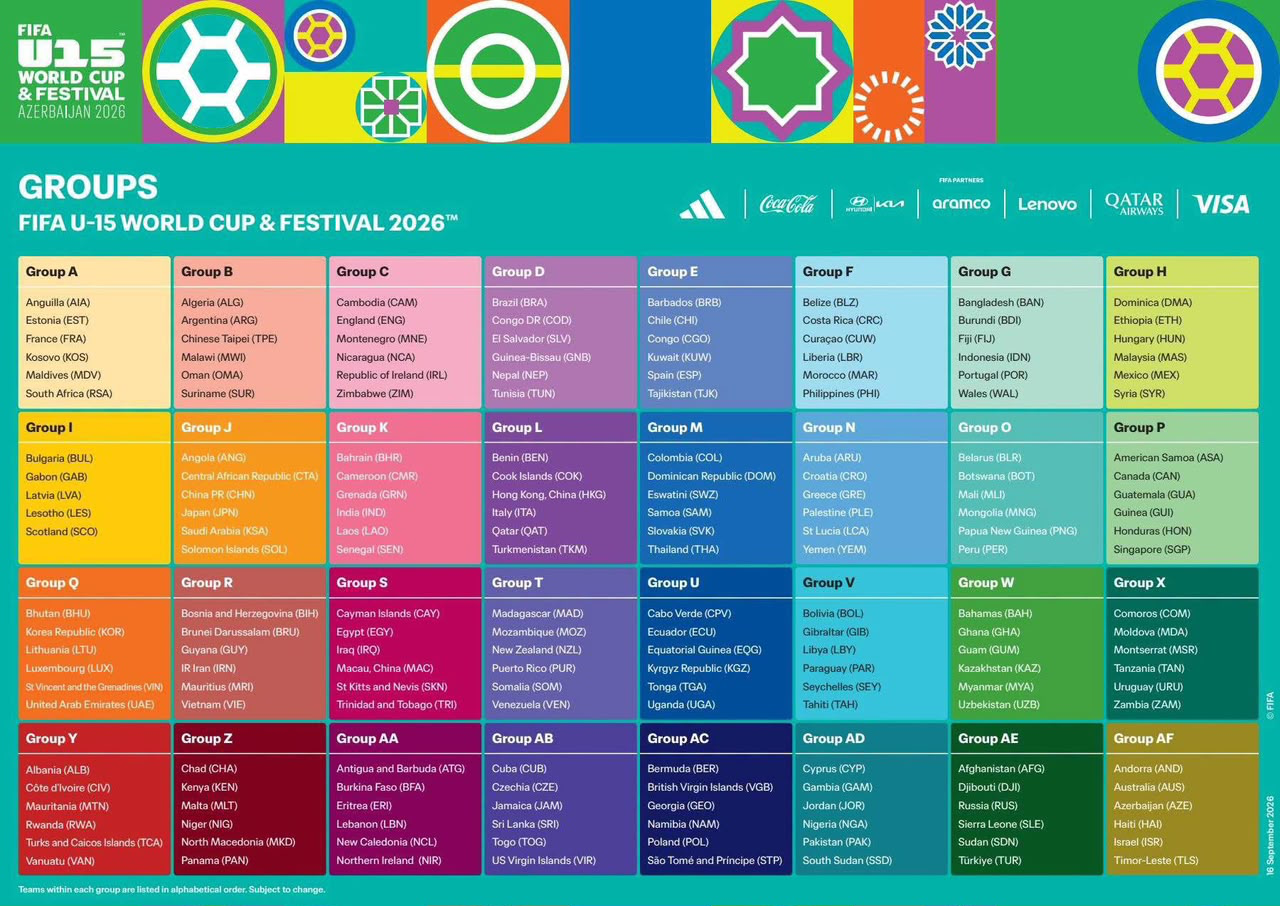
The draw has produced 31 groups of six teams and one group of five, with nations from virtually every corner of the footballing world represented.
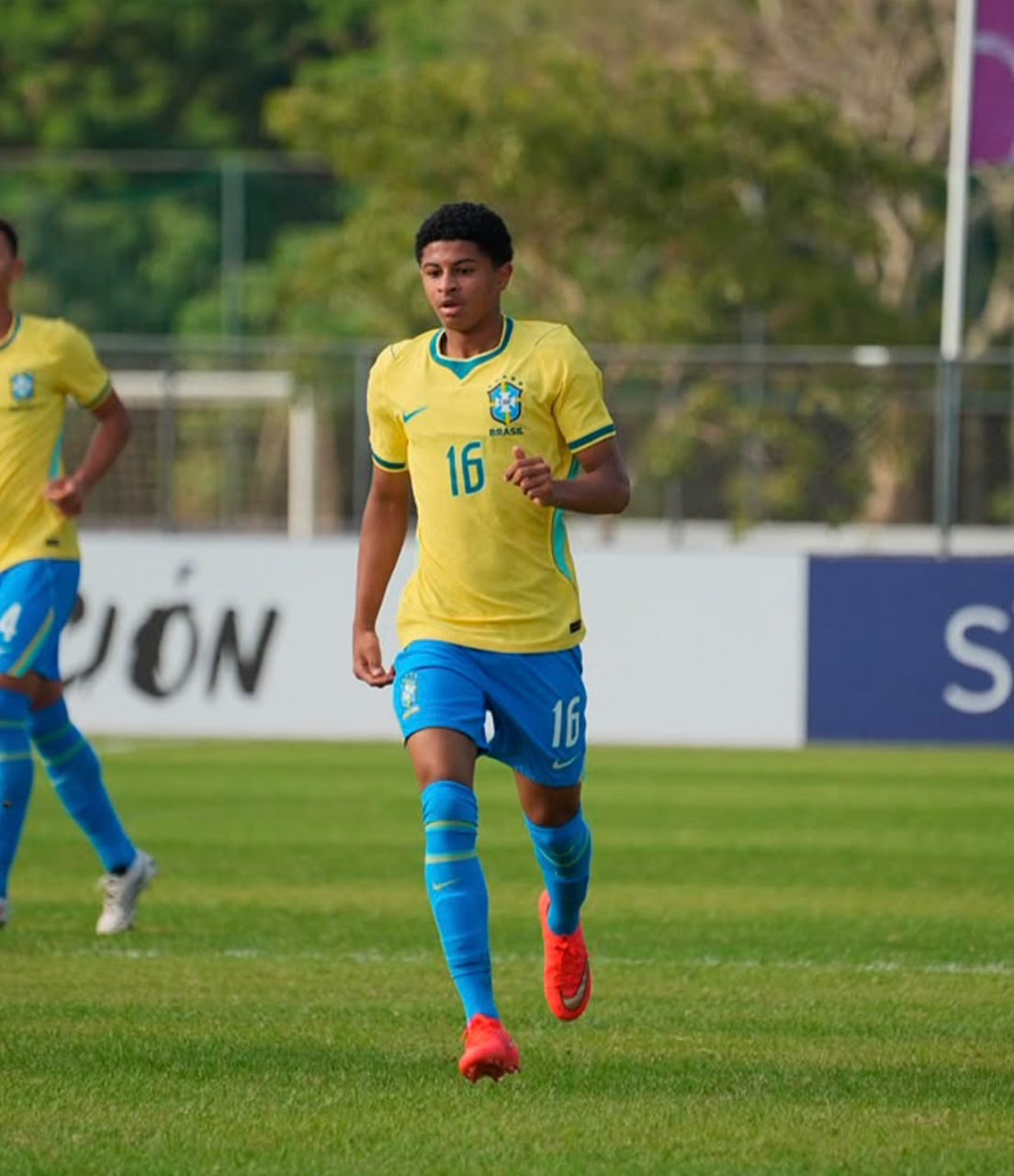
Among the most notable groups, Group B features Argentina alongside Algeria, Chinese Taipei, Malawi, Oman and Suriname. Brazil will compete in Group D with DR Congo, El Salvador, Guinea-Bissau, Nepal and Tunisia, while Spain landed in Group E alongside Chile, Congo, Barbados, Kuwait and Tajikistan.
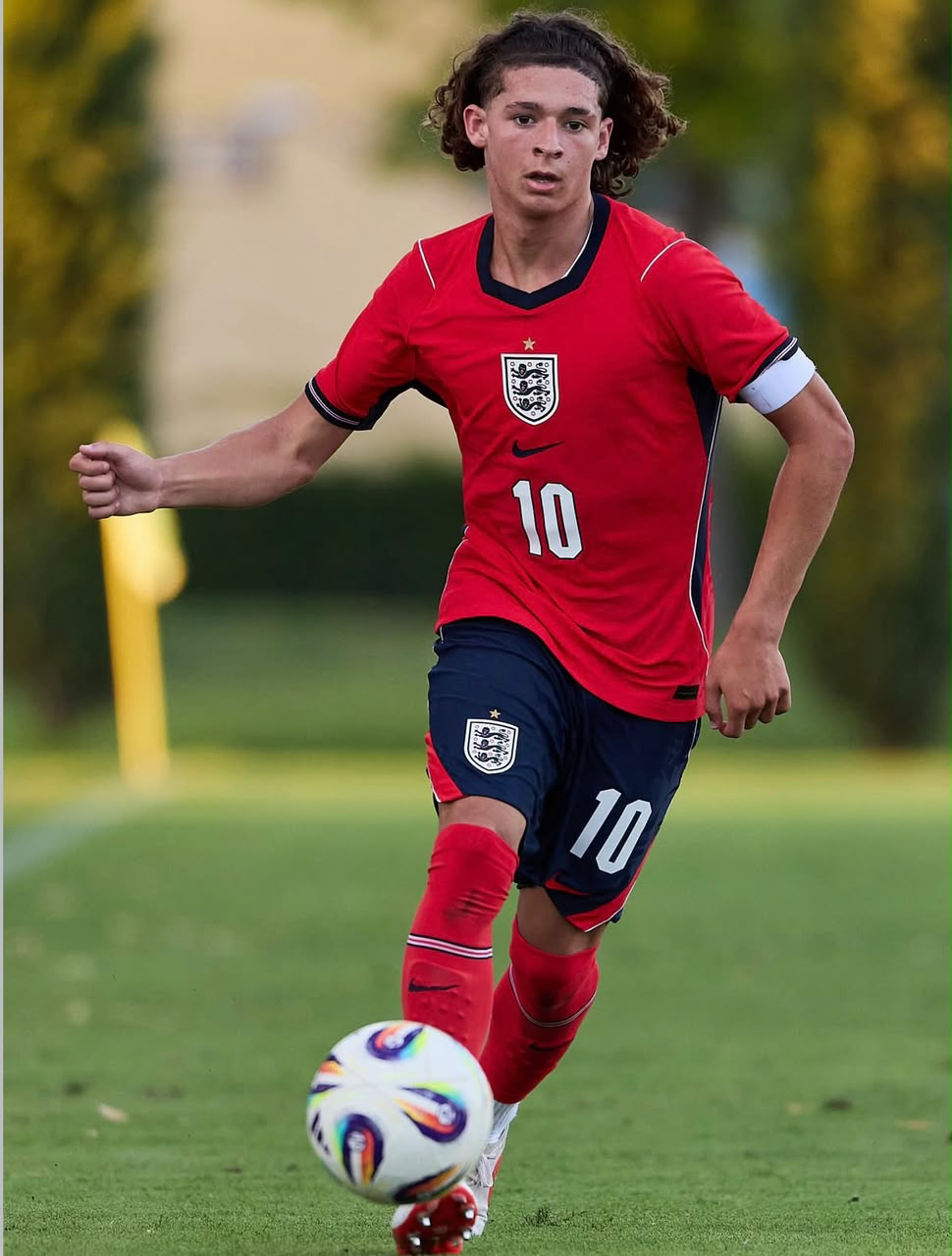
England was placed in Group C with Ireland, Montenegro, Nicaragua, Cambodia and Zimbabwe, while Portugal will face Wales, Indonesia, Fiji, Burundi and Bangladesh in Group G.
Mexico will compete in Group H, where it will meet Hungary, Ethiopia, Malaysia, Syria and Dominica.
The tournament also provides some fascinating matchups between established football nations and countries that rarely get the opportunity to compete against them at this level.
The scale of the competition is perhaps its most remarkable feature.
The 191 participating associations will make the FIFA U-15 World Cup & Festival one of the largest international youth gatherings ever organized. The draw includes traditional powers such as Argentina, Brazil, England, France, Italy, Spain, Portugal and Mexico, but also nations such as Cook Islands, Bhutan, Guam, Timor-Leste, American Samoa, Maldives and Montserrat.
Russia will also make its return to a FIFA-organized international competition at youth level after being included in Group AE with Türkiye, Afghanistan, Djibouti, Sierra Leone and Sudan. Russia has been excluded from FIFA and UEFA competitions since the country’s invasion of Ukraine in 2022, making its inclusion one of the more significant developments surrounding the draw.
The United States, however, is among the notable nations absent from the inaugural tournament. North Korea is also not participating.
Despite carrying the World Cup name, the competition has been designed primarily around player development.
Matches will be played 8v8, with two 20-minute halves and rolling substitutions. Games will take place on smaller 68-by-47-meter fields, while each team can register a delegation of 14 players and up to six staff members. The players eligible for the 2026 edition must have been born in 2011 or 2012.
The opening group stage is only the beginning.
Each team will play four or five matches in the qualification phase. Their results will then determine which of six performance tiers they enter for the second stage of the competition. Every team will continue playing through the final matchday, meaning that even teams that do not finish at the top of their initial group will have additional competitive matches rather than being eliminated.
FIFA expects almost 1,000 matches to be played across six competition days, with more than 3,000 players, coaches and officials descending on Baku.
The concept behind the tournament is broader than simply creating another trophy for the youth calendar.
FIFA designed the competition to give young players from smaller footballing nations the chance to face international opponents they might otherwise never encounter. The organization says the group draw was built using a ranking that combines senior national-team performance with recent youth-level participation and results, helping create competitive balance while ensuring geographical diversity.
For many of the players arriving in Azerbaijan, it will be their first experience of a global FIFA tournament.
That is ultimately what makes the inaugural edition so intriguing. There will be no established history, no previous champion and no traditional qualification path to define the field. Instead, 191 countries will arrive in Baku with the same basic objective: give their next generation of players an international stage.
The tournament will also serve as the beginning of a new FIFA youth competition calendar. The girls’ edition is scheduled to follow in 2027, with both boys’ and girls’ U-15 competitions planned to become annual events from 2028 onward.
It will be an opportunity to experience international football on an unprecedented scale — and potentially the first major global tournament appearance of future stars.
Share this story
Help spread the word about youth soccer