
Estadio Banorte Era Begins: $150M Transformation Sets Stage For 2026
From a player pathway perspective, this matters more than it seems. Infrastructure defines opportunity.
Leo Santos
Sports Journalist
The Estadio Azteca, one of football’s most iconic venues, enters a new era this weekend. Rebranded as Estadio Banorte, the stadium will be unveiled ahead of the 2026 FIFA World Cup when Mexico hosts Portugal in a high-profile friendly. This marks the first public look at a $150-plus million renovation designed to future-proof one of the game’s most historic stages while maintaining its cultural gravity.
The upgrades are extensive and targeted. A new hybrid pitch brings elite-level surface consistency aligned with global standards, while redesigned seating improves sightlines and capacity flow. Hospitality zones have been expanded to meet modern commercial demands, and a seven-level parking and hotel complex adds integrated infrastructure rarely seen in legacy stadiums. The addition of a new roof structure is the most visible transformation — enhancing acoustics, weather protection, and overall matchday experience.
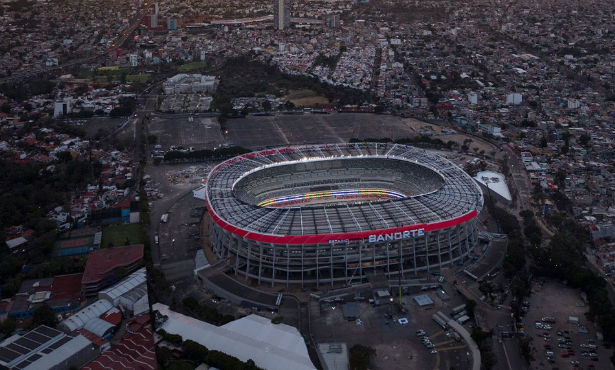
For Mexico, the timing is strategic. The stadium is set to host the opening match of the 2026 World Cup, reinforcing its position as a global football landmark. Having already staged two World Cup finals (1970, 1986), this renovation ensures the venue remains relevant in a tournament landscape now defined by technology, fan experience, and broadcast optimization. It’s not just a facelift — it’s a recalibration to modern FIFA standards.
From a player pathway perspective, this matters more than it seems. Infrastructure defines opportunity. When a federation invests at this scale, it signals alignment with elite development environments — pitch quality, recovery spaces, and matchday conditions that mirror what top prospects will face in Europe or MLS. For Mexican youth internationals and academy players, competing in a venue like this reduces the adaptation gap at the next level.
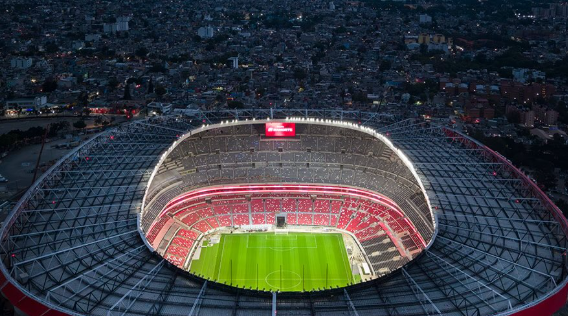
The broader takeaway for Gen Z players and families is clear: the global game is raising its baseline. Facilities are no longer just backdrops — they are development tools. As the World Cup approaches, venues like Estadio Banorte become reference points for what “elite environment” actually looks like. The question for the next generation isn’t just can you play at that level. It’s are you being developed in an environment that prepares you for it?
Share this story
Help spread the word about youth soccer