
Alexander Shaw Signs First-Team Deal With Inter Miami
He made his MLS debut against Charlotte FC, following earlier first-team exposure during the 2026 preseason cycle.
Leo Santos
Sports Journalist
Inter Miami has officially signed 17-year-old midfielder Alexander Shaw to a first-team contract, with built-in options extending through June 2027 and beyond into the 2028-29 season. Shaw becomes the 11th Inter Miami CF Academy product to reach the senior squad — another clear signal that the club’s internal pathway is not just active, but accelerating.
Shaw’s integration has been deliberate and performance-based. He made his MLS debut against Charlotte FC, following earlier first-team exposure during the 2026 preseason cycle. That included appearances on the club’s “Champions Tour 2026,” where he featured against Alianza Lima, Barcelona SC, and Independiente del Valle. Notably, Shaw progressed from substitute minutes to earning a starting role — an early indicator of coaching trust in a high-competition environment.
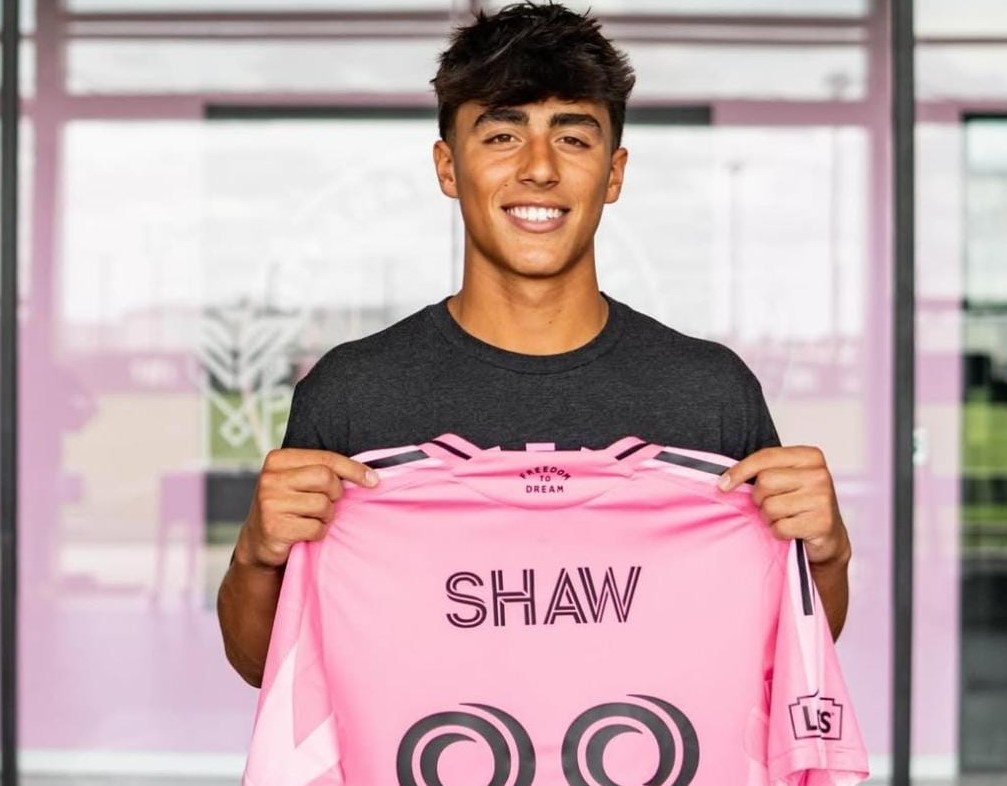
His rise is rooted in consistent production at the developmental level. After standing out in the academy, Shaw transitioned to Inter Miami II, where he logged 13 matches and recorded two assists in his first professional season. The data point here is less about raw output and more about early professional adaptation — minutes earned, roles trusted, and progression sustained.
Internationally, Shaw is already navigating dual-pathway dynamics. He has recently been called into the United States U18 national team setup, while also drawing interest from Colombia’s U20s. Inter Miami’s decision not to release him for Colombia signals a strategic prioritization of his club development phase — common for players at this inflection point.

Shaw’s signing reinforces a critical trend — MLS academies are no longer just talent pools, but direct pipelines to first-team football. For next-gen players, the takeaway is clear: early professional exposure, not age, is becoming the primary currency. Shaw’s trajectory shows that if you can handle the speed of the game at 17, clubs are increasingly willing to fast-track the pathway.
Share this story
Help spread the word about youth soccer