
Everything You Need to Know About the 2026 FIFA U-17 World Cup: Teams, Format and Key Storylines
The 2026 FIFA U-17 World Cup kicks off in Qatar on November 19, bringing together 48 national teams for 104 matches. Argentina will compete in Group C alongside Australia, Mozambique and Denmark, while defending champions Portugal return to defend their crown. The United States has withdrawn from the competition, with the Dominican Republic taking its place.
Lucas Aguirre
Sports Journalist
The next generation of international football talent is ready to take center stage as the 2026 FIFA U-17 World Cup begins in Qatar on Thursday, November 19. The tournament will run through December 13, bringing together 48 national teams and some of the most promising young players from around the world.
This will be the second consecutive edition hosted by Qatar and the second tournament played under FIFA’s expanded 48-team format. With 104 matches scheduled, the competition offers a major international platform for emerging prospects, many of whom could become familiar names in senior football in the years ahead.

The 2026 FIFA U-17 World Cup will be held from November 19 to December 13 in Qatar. Most of the competition will take place at the Aspire Zone complex in Al Rayyan, Doha, which will host matches across eight pitches. The final is scheduled to be played at Ahmad bin Ali Stadium on December 13.
Qatar is hosting the tournament for the second year in a row and is scheduled to remain the host nation through 2029 following FIFA’s decision to make the men’s U-17 World Cup an annual competition.
The tournament will feature 48 national teams divided into 12 groups of four. Each team will play three group-stage matches, facing every other side in its group once.
The top two teams from each group will automatically qualify for the knockout stage, alongside the eight best third-placed teams. This means that 32 nations will advance to the Round of 32, where the competition will move to a single-elimination format. From that point onward, every defeat will mean elimination, with the eventual champions needing to navigate five knockout matches to lift the trophy.
The expanded format gives more countries the opportunity to compete on the global stage while also creating additional possibilities for teams that do not finish among the top two in their groups.
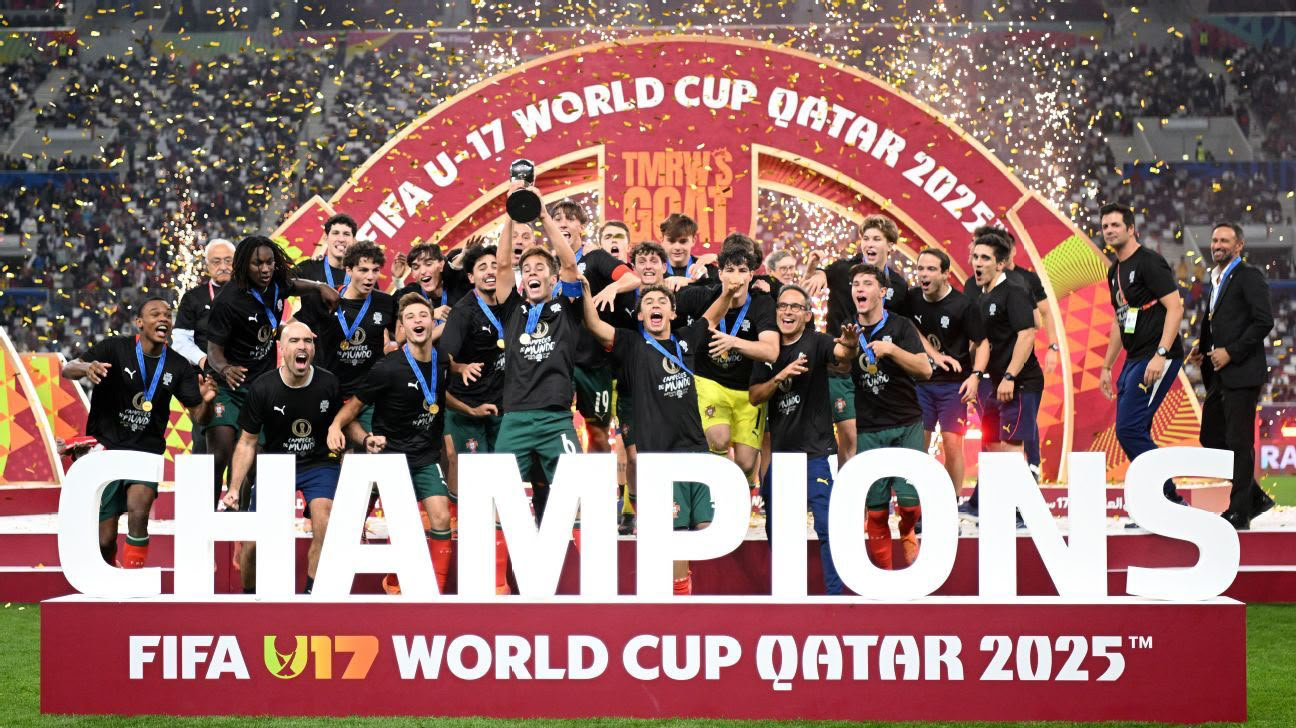
Portugal arrive in Qatar as the reigning champions after winning the 2025 edition, defeating Austria in the final to claim their first-ever U-17 World Cup title. The Portuguese will now attempt to become the first team to successfully defend the trophy in the competition’s history.
Brazil are also among the historically successful nations in the tournament. The South Americans have won the title four times, in 1997, 1999, 2003 and 2019. Nigeria remain the record champions with five titles, making them another important reference point whenever the competition begins.
Other traditional contenders include France, Spain, Italy, Japan and Mexico, all of whom have produced competitive teams at this level. African nations will also be worth watching, given the continent’s history of success in youth international football.
The group stage features several intriguing matchups. Spain and Morocco will meet in Group H, Japan will face Colombia in Group L, while France and Uruguay headline Group D. Hosts Qatar will also have a challenging assignment against Egypt in Group A.

One of the biggest stories ahead of the tournament has been the withdrawal of the United States.
U.S. Soccer announced that it would not send its U-17 men’s national team to Qatar, citing security concerns and the existing U.S. State Department Level 3 travel advisory, which urges Americans to reconsider travel to the country.
FIFA confirmed that it had received the decision and subsequently appointed the Dominican Republic as the replacement team following consultation with Concacaf.
The Dominican Republic finished as the highest-ranked non-qualified team in the United States’ qualifying group. Both nations ended that group with seven points, and their head-to-head meeting had finished in a draw.
The tournament will therefore mark the Dominican Republic’s first-ever appearance at a FIFA U-17 World Cup. The team will compete in Group J alongside Montenegro, Chile and Algeria, giving the Caribbean nation an opportunity to make history on the global stage.
FIFA stated that its own security assessments remained unchanged and that it had not identified new developments affecting the tournament’s security situation. The governing body also reiterated that the safety of players, staff and fans remained its priority.

Since the inaugural edition in 1985, 11 different nations have won the FIFA U-17 World Cup. Nigeria lead the historical standings with five titles, followed by Brazil with four. Ghana and Mexico have each won the tournament twice, while several other countries have lifted the trophy once.
Portugal are the reigning champions after their triumph in 2025. Before that, Germany won the 2023 edition, Brazil claimed the 2019 title, England lifted the trophy in 2017 and Nigeria won in 2015 and 2013. Mexico were champions in 2011, Switzerland in 2009 and Nigeria again in 2007.
The 2021 edition was canceled due to the COVID-19 pandemic, which explains the gap between the 2019 and 2023 tournaments. Since then, FIFA’s decision to hold the competition annually has created a more consistent international platform for young players.
With 48 teams, a 32-team knockout stage and a wide range of footballing cultures represented, the 2026 FIFA U-17 World Cup promises another opportunity to discover the next generation of international stars.
The countdown is almost over. On November 19, the next generation of international football will have its own World Cup stage, with a new group of young players looking to announce themselves to the world.
Share this story
Help spread the word about youth soccer